BenjaminAbensur
I build software end to end and ship it, I teach two first-year courses, and I take on things outside engineering when they are worth doing.
 Open · Summer 2027 internship
Selected work
Five projects, one number each.
Every figure on this page is on my CV, visible in the live app or measured in the public repo, and holds up in an interview.
- 01
ReCHor
Java 22 · JavaFX 21 · EPFL CS-108, in a pair
A desktop journey planner for the Swiss public-transport network. It finds every Pareto-optimal journey between two Swiss stops (Connection Scan Algorithm) over real CFF timetables (~258 MB), trading arrival time against changes, by scanning the day's connections once in reverse chronological order over memory-mapped, bit-packed timetable storage that is never deserialised. JavaFX UI with accent-insensitive autocomplete, journey details, iCalendar and GeoJSON export, the search kept off the UI thread; 44 classes, ~3,600 lines of tests, 160 JUnit tests.
2.75 Mconnections in one weekday of the real CFF timetables, scanned in a single pass per query. ~258 MB of timetables for seven days, read from memory-mapped files.- IC 107:35 Genève → 10:28 Zürich HB
- IC 310:38 Zürich HB → 11:52 Chur
- IR 3811:58 Chur → 13:56 St. Moritz
Fig. 1Genève → St. Moritz, 28 May 2025: the first journey after 07:00, found by ReCHor's own router on the real CFF timetable, replayed stop by stop. 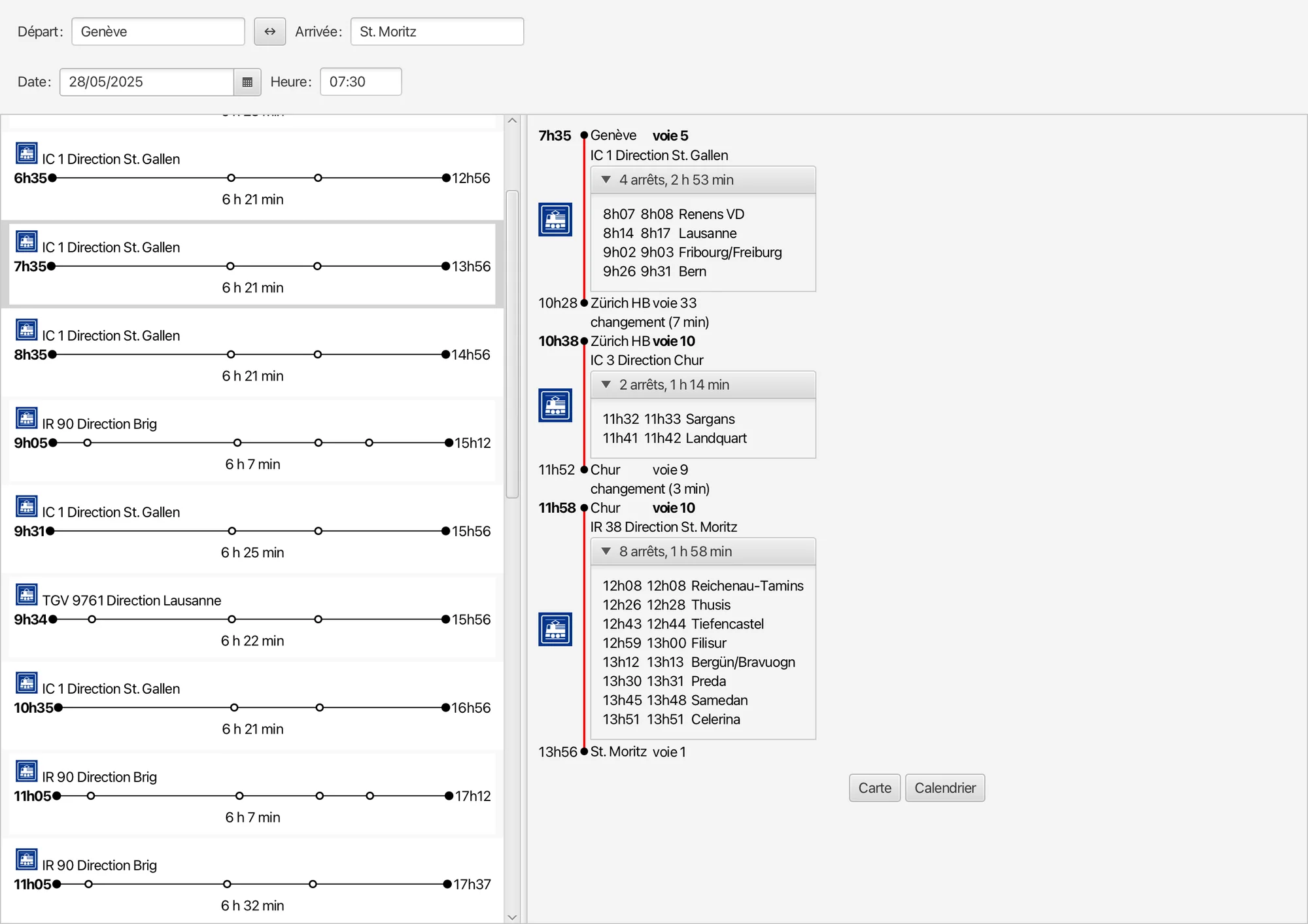
Fig. 2The app itself on the same query: the day's journeys on the left; on the right the 7h35, IC 1, IC 3 and IR 38 over the Albula line, every stop and both changes. - 02
Kairo
Next.js · TypeScript · Python · PostgreSQL (Supabase, row-level security) · GitHub Actions · Railway · Vercel
An internship search and application platform, live with public users since October 2026. A scheduled Python pipeline on Railway pulls openings from employers' public job feeds and ATS APIs, deduplicates them, then an LLM worker scores each one against every user's profile. Multi-tenant Postgres isolated by row-level security; an application copilot drafts each form answer with its source and flags uncertain ones for the user to check before submitting; 160+ tests, CI. The referral finder turns freeform notes into structured contacts with LLM extraction, then links every opening to the user's direct and indirect connections at that company, so no warm intro is missed.
kairocareer.app Private code0–100the score every opening gets against each user's profile, with the reason for it in one line.
Fig. 3The landing, kairocareer.app: Kairo finds the internships that match your profile and helps you prepare your applications. 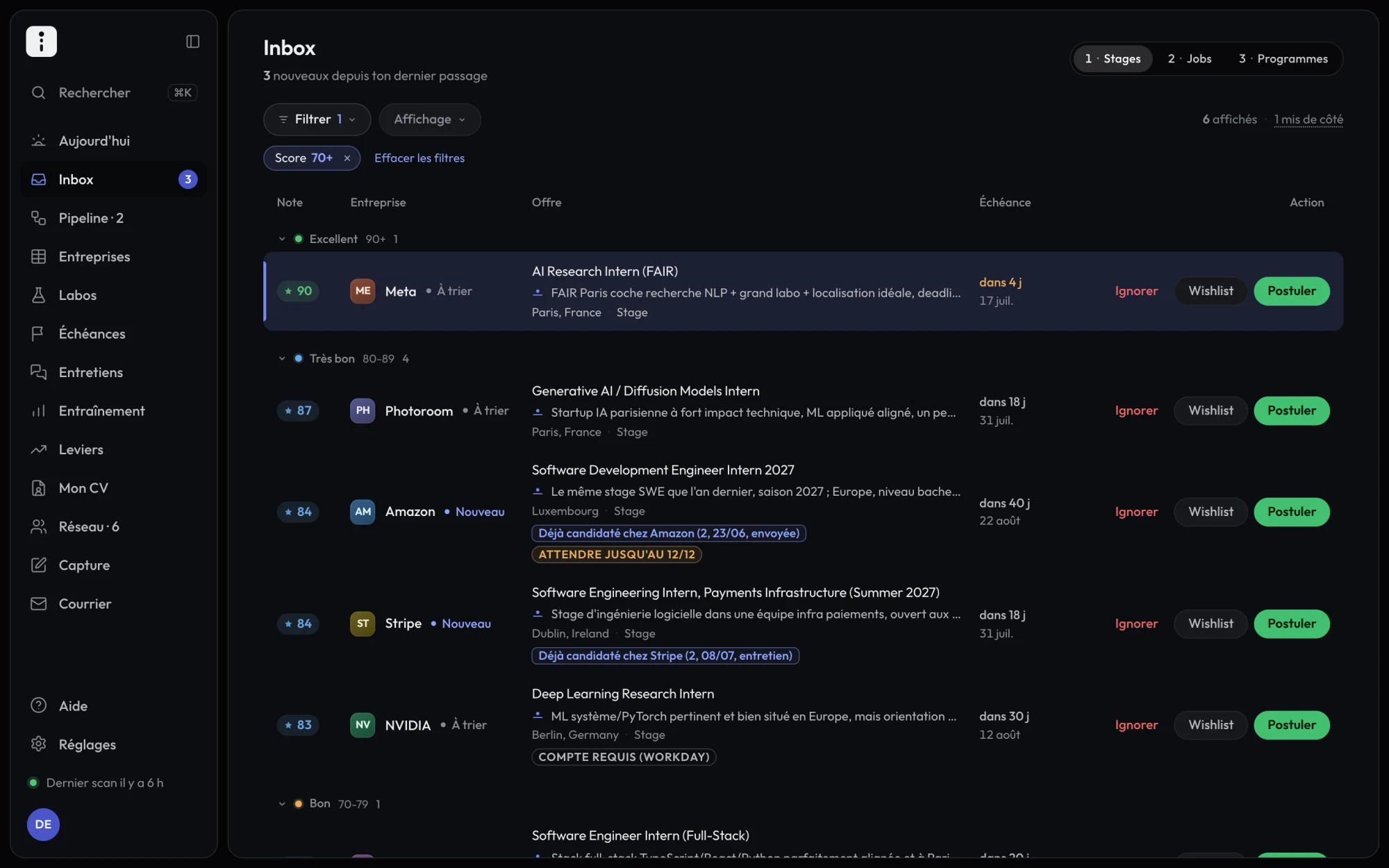
Fig. 4Inside the app (in French, on its demo data): the inbox, every opening scored 0–100 against the profile, with the reason in one line and the deadline. 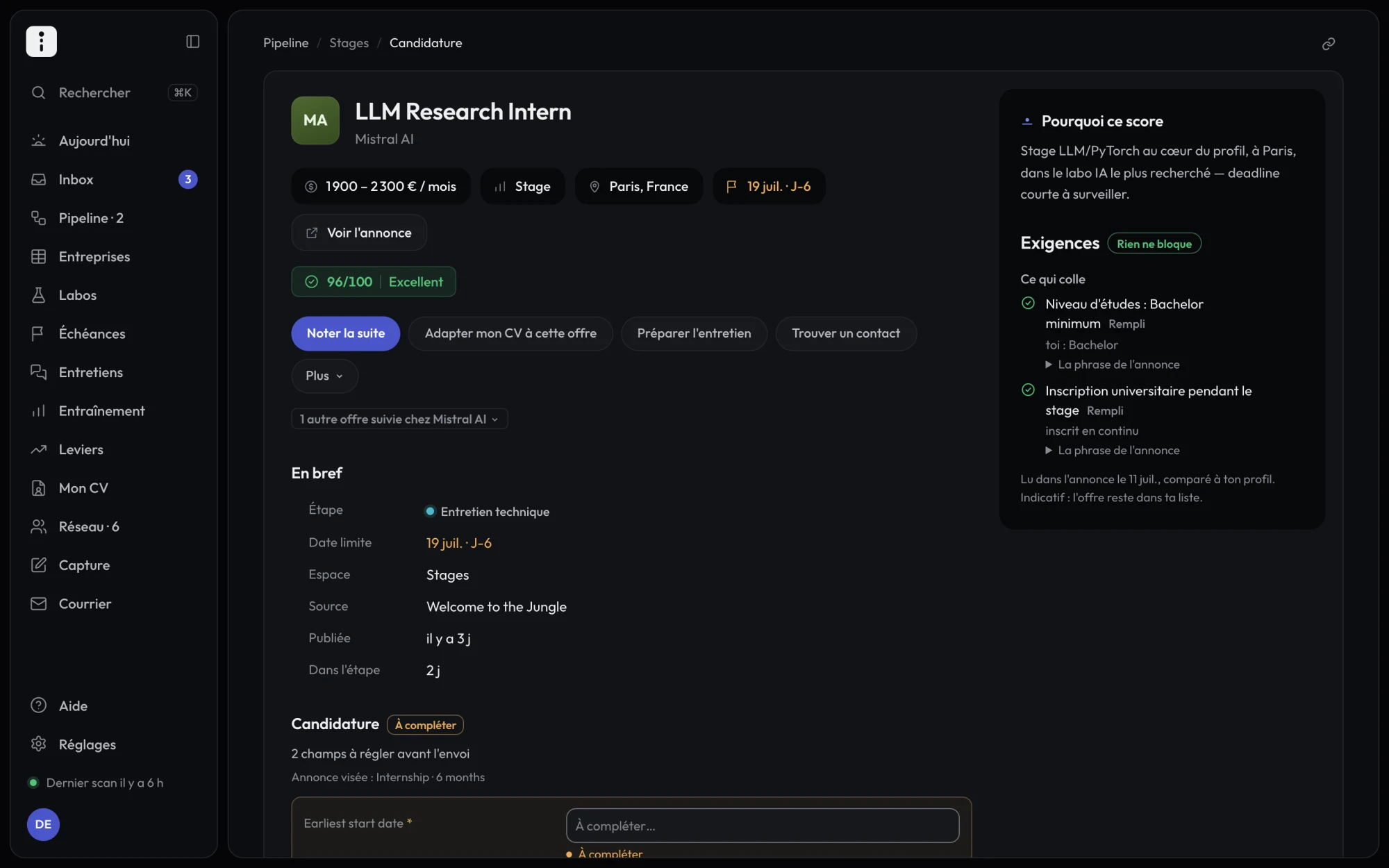
Fig. 5One offer opened: the score and why, each requirement checked against the profile with the posting's sentence behind it, and the next steps. 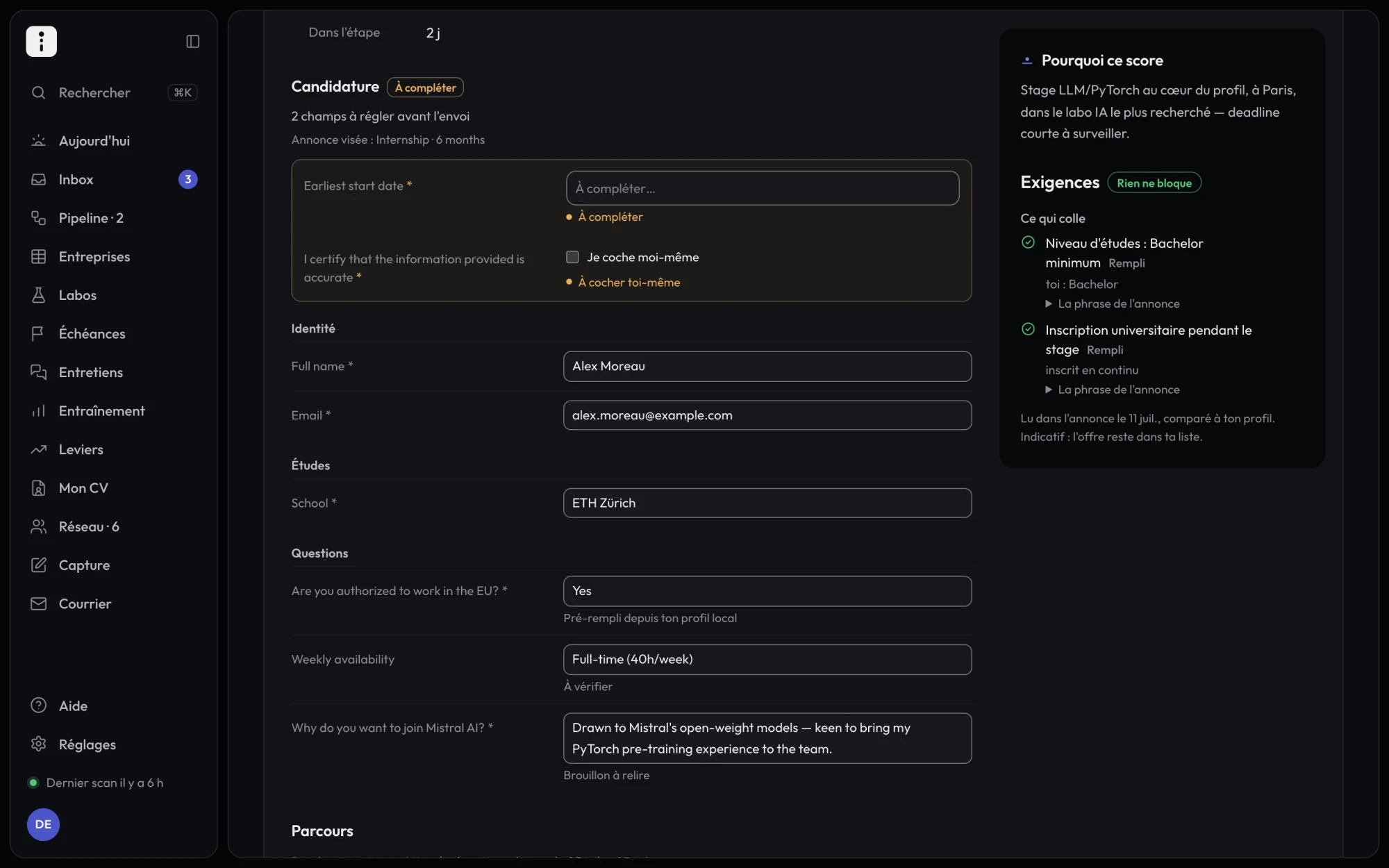
Fig. 6The application copilot: each answer drafted with its source, the uncertain ones flagged, and what only the user can fill left to them. Nothing is sent by the app. 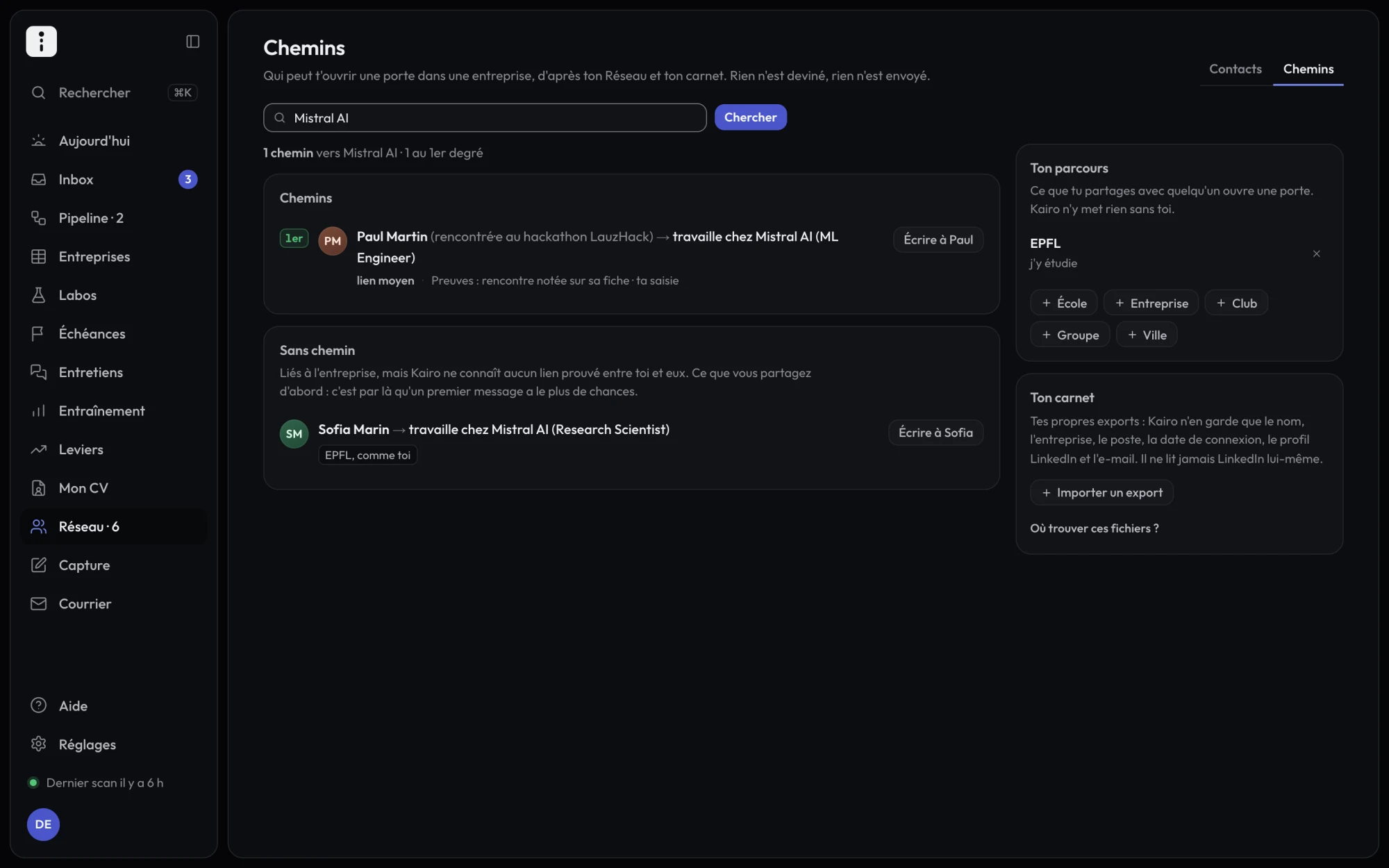
Fig. 7The referral finder: who can open a door at a company, a direct contact with the proof of the link, then the indirect ones, here someone from the same school. - 03
Cortex
Next.js · TypeScript · PostgreSQL · Drizzle · LaTeX · Railway
An exam-preparation platform. It learns each course's exam format from past papers, weights every topic by how heavily it was examined, schedules spaced revision on weak points, and generates faithful practice exams via a multi-pass LLM pipeline; I used it to prepare my own exams in 3 EPFL courses. Per-user Postgres schemas and cost caps; open to sign-ups since October 2026.
330+tests. Answers accepted only if verified by sandboxed code execution or symbolic checks.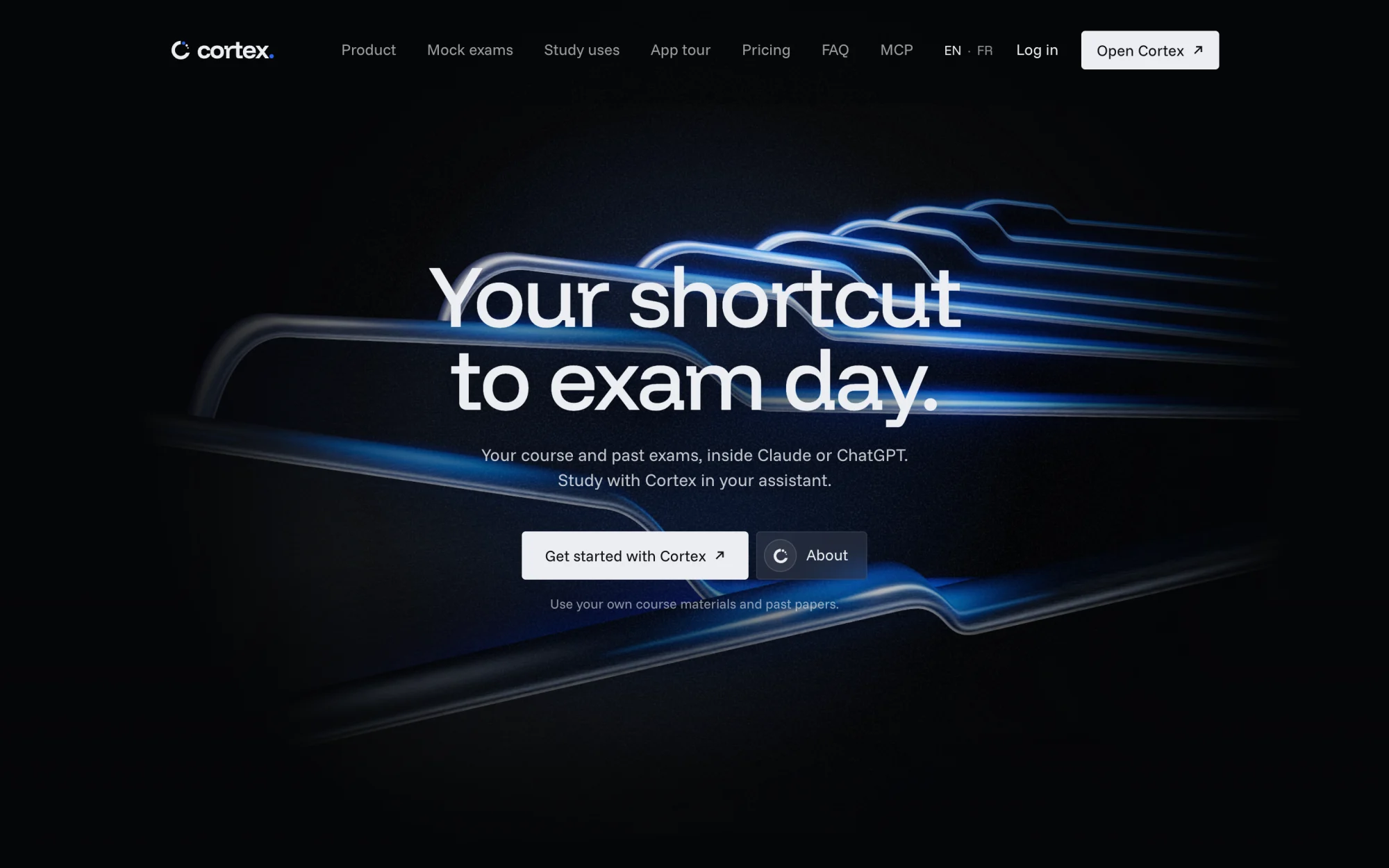
Fig. 8The landing, cortexexam.com. Below, the app itself. 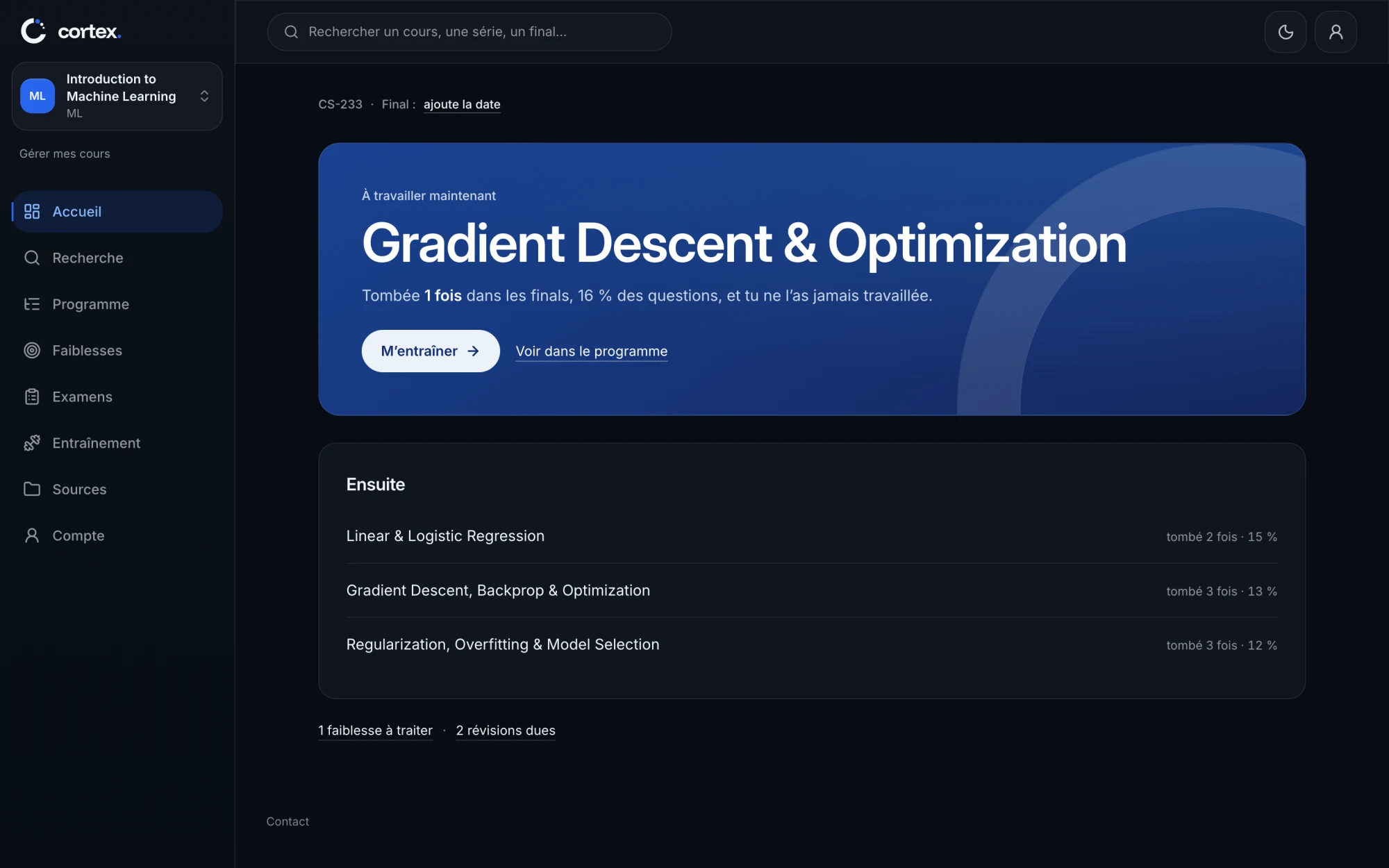
Fig. 9Inside the app (in French): the home screen, the topic that pays off most today, weighted by how often it fell at past finals. 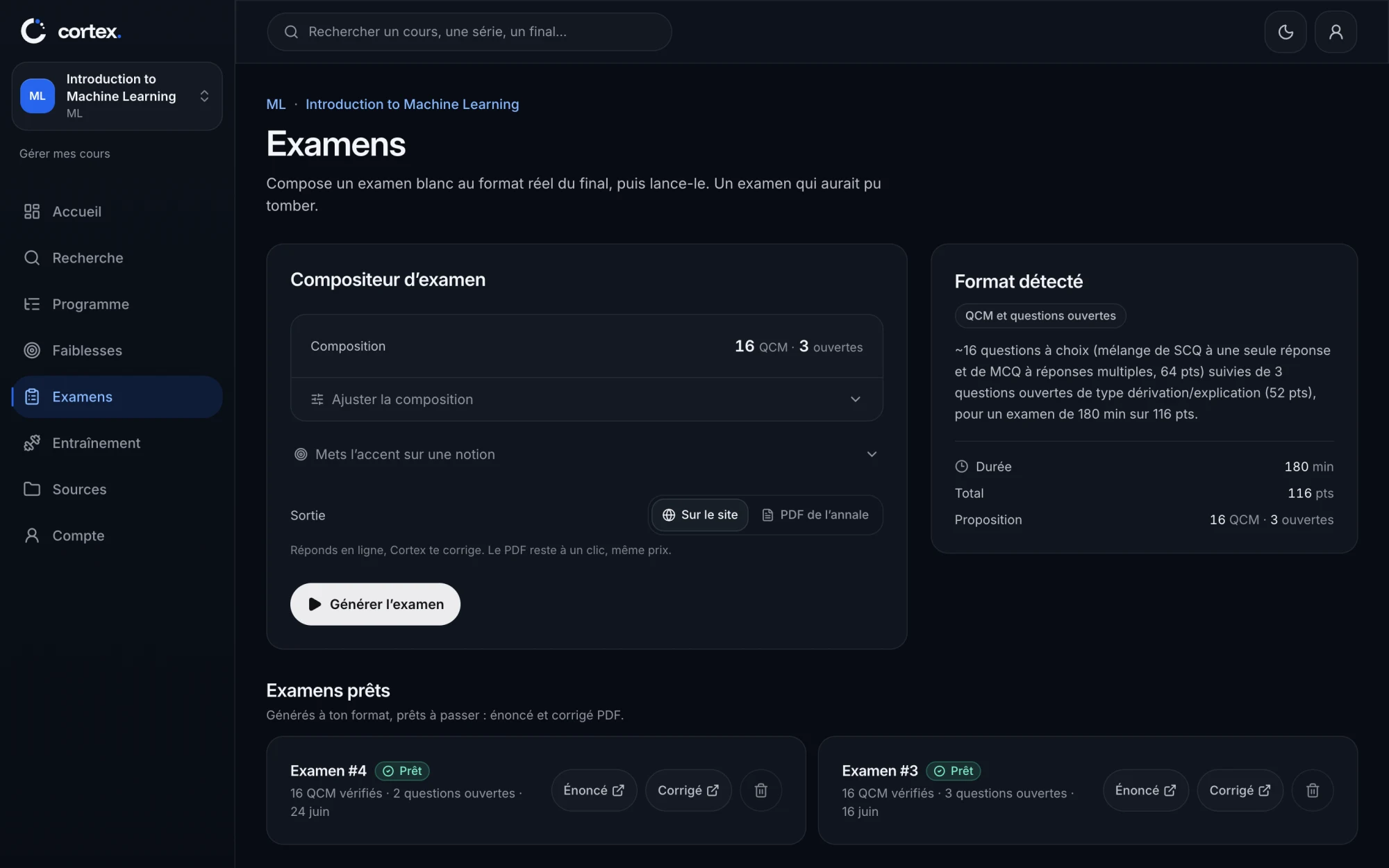
Fig. 10The exam composer: the real final's format, detected from past papers, becomes the default, and each ready exam says how many of its answers were verified. 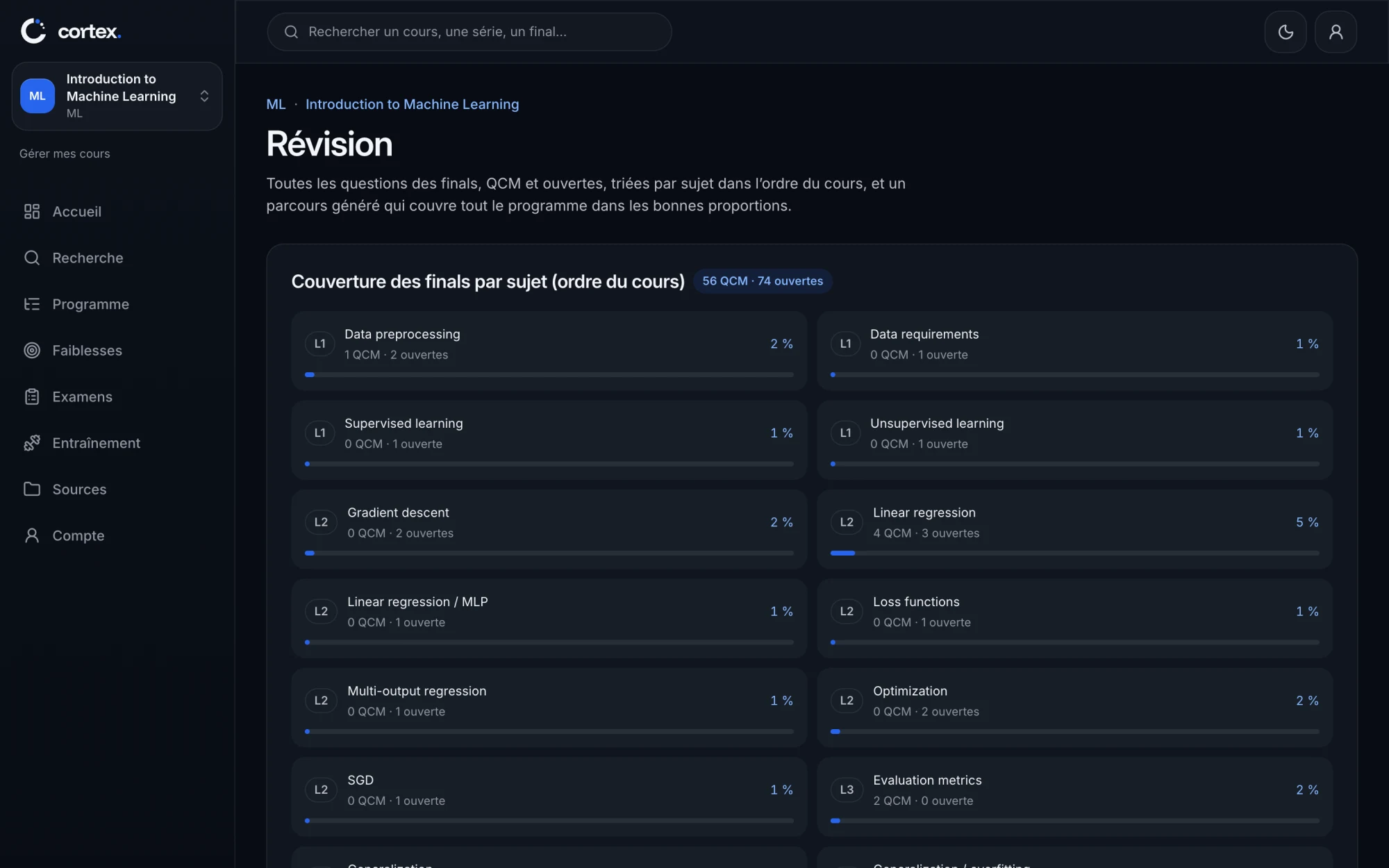
Fig. 11Revision: every past-final question filed by topic, in course order, with each topic's share of the exams. - 04
Gaming Addiction Prediction
Python · NumPy, no ML libraries · EPFL CS-233, team of 3
Predicted gaming-addiction level (3 classes) and score (0–10) from gaming and mental-health data with KNN, logistic/linear regression, K-Means and an MLP with hand-written backpropagation, every gradient checked against finite differences; two written reports. The point is what accuracy hides: the first MLP scored 85% while never once predicting the rare class, 3% of the data. Inverse-frequency weighted cross-entropy lifted rarest-class recall from 0 to 0.69 and macro-F1 from 0.55 to 0.76 (test set), for 0.75 points of accuracy.
0 → 0.69rarest-class recall, lifted by an inverse-frequency weighted cross-entropy. Macro-F1 from 0.55 to 0.76 (test set).Before: sigmoid + MSE Low Medium High Recall Low 266 14 0 0.95 Medium 32 75 0 0.70 High 0 13 0 0.00 After: softmax + weighted cross-entropy Low Medium High Recall Low 258 22 0 0.92 Medium 31 71 5 0.66 High 0 4 9 0.69 Rows: true class. Columns: predicted class. Shade: share of the true class.
Fig. 12Test-set confusion matrices, redrawn from the milestone-2 report (400 samples). The baseline never predicts High; the weighted loss recovers 9 of 13. - 05
ICoop
Java · PlayEngine (course engine) · EPFL CS-107, in a pair
A two-player cooperative 2D game on the course's engine: a fire-and-water co-op game with a boss fight, in the spirit of Fireboy and Watergirl. Each player passes what the other cannot; every interaction between players, projectiles, enemies and elemental walls goes through double dispatch (visitor pattern), and each cell decides what can walk or fly over it. Four areas, keys, orbs, bombs, a chest added beyond the brief, and a final boss with ranged attacks and a conditional weak spot. ~3,700 lines.
~3,700lines of game code, in 24 actor classes and 4 areas, written on top of an unmodified course engine.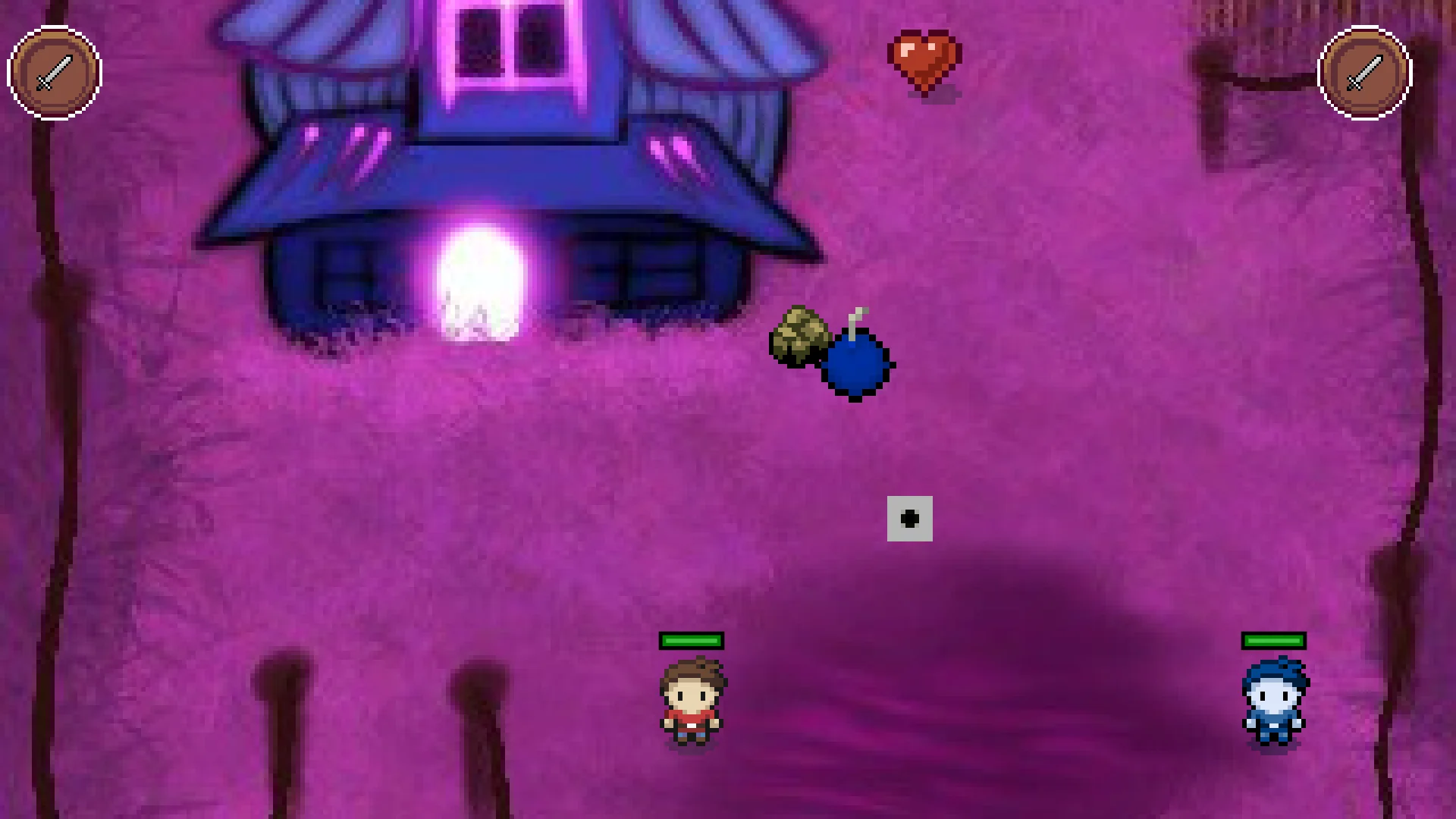
Fig. 13ICoop, the Spawn area: the fire and water players, a bomb to push and a pressure plate. 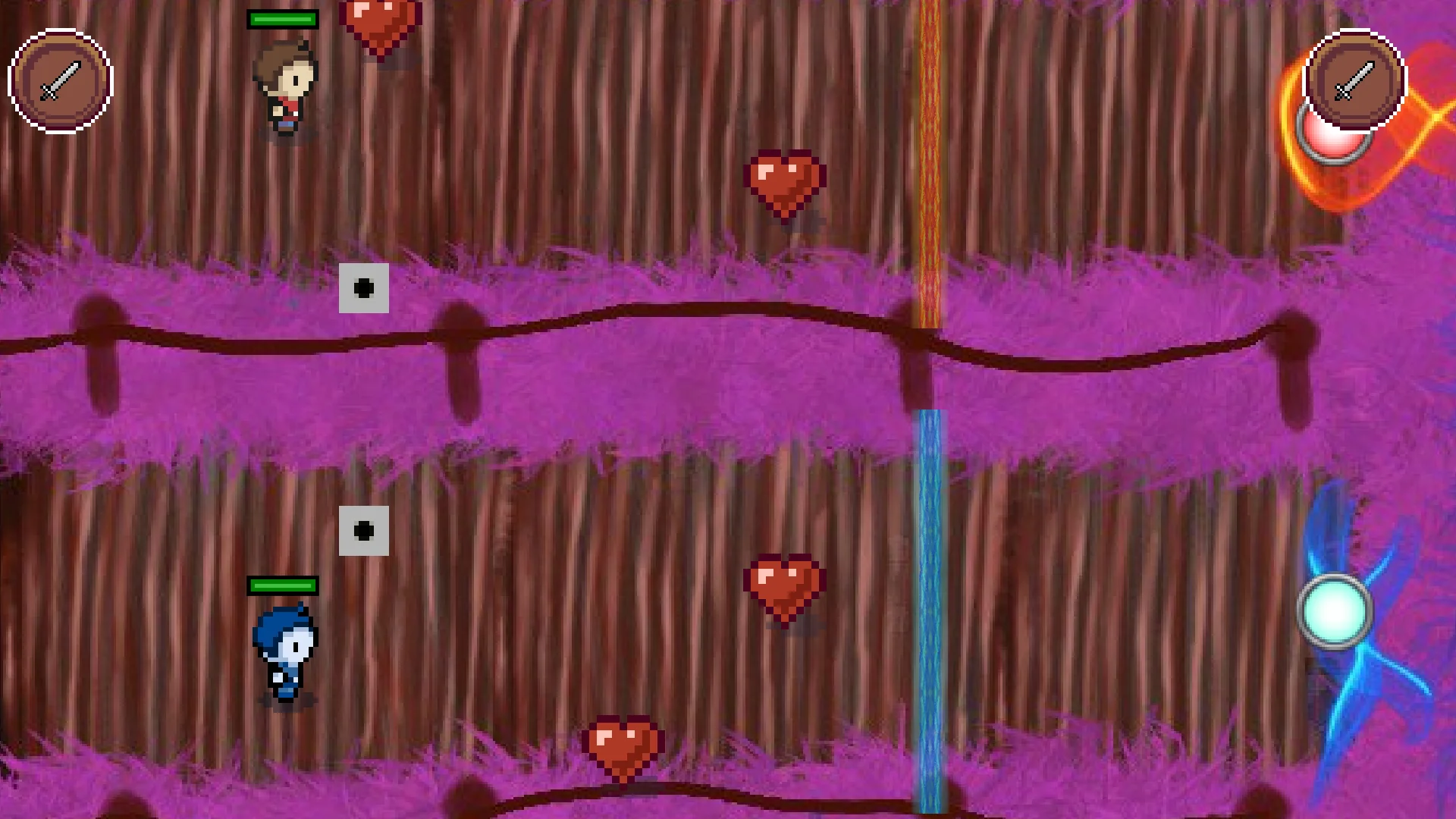
Fig. 14OrbWay: each player clears the wall the other cannot cross. 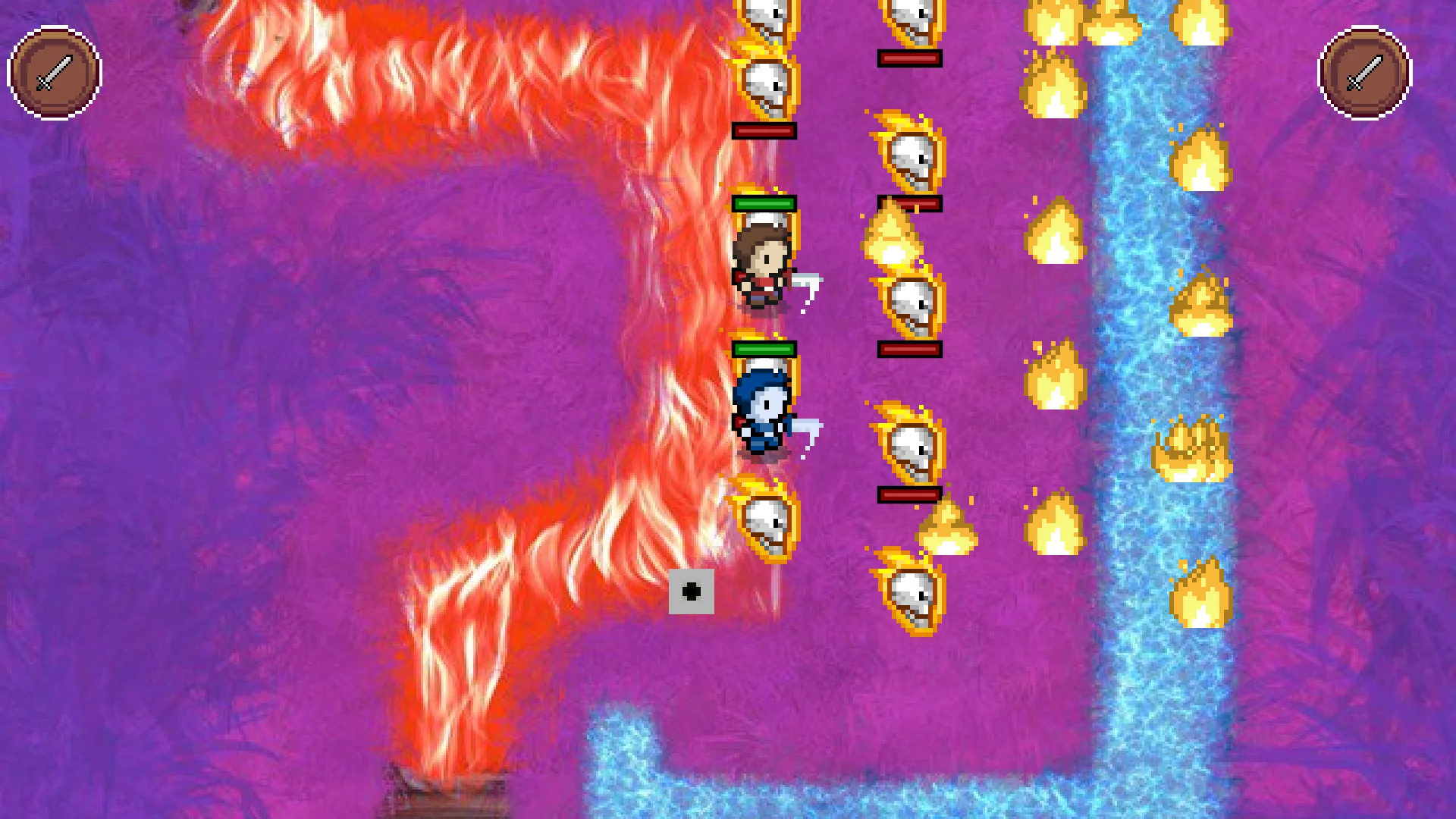
Fig. 15The Maze: the HellSkull gauntlet, lava and water streams, both players mid-swing.
Also on the books
Smaller lines, still real.
- 06Digital-logic library42 synthesizable modules with self-checking testbenches, logic gates to a register file · Verilogself-initiated
- 07Systems projectNetworking and UNIX filesystem in C · POSIX sockets, pthreads · in a pairCS-202
- 08VeriReasonA PyTorch Transformer from first principlesin progress
- 09QR-code generatorReed–Solomon error correction and masking, by hand · JavaCS-107
Journey
Eight entries, so far.
- 01Around 13
Where it began
Self-taught Blender, Photoshop and Premiere Pro. 3D artwork and branding for YouTube creators.
- 022024
EPFL
Bachelor of Science in Communication Systems, School of Computer and Communication Sciences (IC), Lausanne; expected graduation Jan 2028. Introduction to Machine Learning 5.75/6, Algorithms I 5.5/6, Linear Algebra 5.5/6.
- 03Jun – Sep 2024
NanoSynex
Software Engineer, ML & Statistical Modeling, remote, for a Technion medtech spin-off. Modeled bacterial growth in Python and NumPy to compare Wald's sequential probability ratio test (SPRT) with a fixed-threshold rule for antibiotic susceptibility testing: in simulation, the SPRT reached a decision 20% sooner, with a major-error rate below 3%. Benchmarked the rapid antibiotic test against a veterinary reference laboratory for a validation study, merging both result sets by sample ID in pandas and quantifying agreement rates. Deployed two offline LLMs behind a model router with shared memory, so confidential R&D and investor documents never left the machine, and automated inbox triage with an LLM classifier routing email into custom priority categories (investors, grants, R&D).
- 042025
BABOO, three club nights
Founder & event producer, Lausanne. Produced 3 club nights end to end that brought in CHF 10,000, one at Noche Club with an internationally touring DJ.
- 05Jul 2025
Scout summer camp, co-camp director
Mévouillon, France. Co-directed a one-month camp for 80 children from two local groups (Nice, Strasbourg); led a team of 15 counsellors, promoted team leads and wrote the camp's full educational project. Co-managed the €80k camp budget, running the €18k food line myself (local farmers, Intermarché), and built the site at pre-camp: tents, dry toilets, wooden tables.
- 06Nov 2025
Linear Algebra Bootcamp (MATH-111)
Co-instructor: gave the lectures and wrote the exercise sets of a paid one-week bootcamp for 30 first-year students (mid-semester break).
- 07Sep 2026
Teaching at EPFL
Teaching assistant for Mechanics (PHYS-101) and Linear Algebra (MATH-111). Selected on academic merit for a Mechanics course of 1,000+ students (CS, Chemistry, EE); I lead a weekly 2-hour exercise session and answer questions on the course's Ed forum.
- 08Oct 2026
Biosynex, AI Engineer
AI Engineer (part-time), remote, for a Euronext-listed rapid diagnostics company. Building a RAG-based copilot over regulatory and quality documentation to speed up compliance and document search; deploying AI agents and automation pipelines (tender responses, reporting, recurring tasks) and leading AI adoption through training on LLMs, agentic workflows and automation.